
FABBLOCK UX
Intelligence You Can See
System Classification: Software-Defined Universal Assistive Device Framework
The FabBlock-UX framework functions as an immutable physical shell, relying on a localized, ultra-low-latency execution pipeline to hot-swap between sensory restoration profiles on a single hardware chassis.
One standardized hardware specification consolidating the assembly line to secure instant consumer-scale efficiencies.
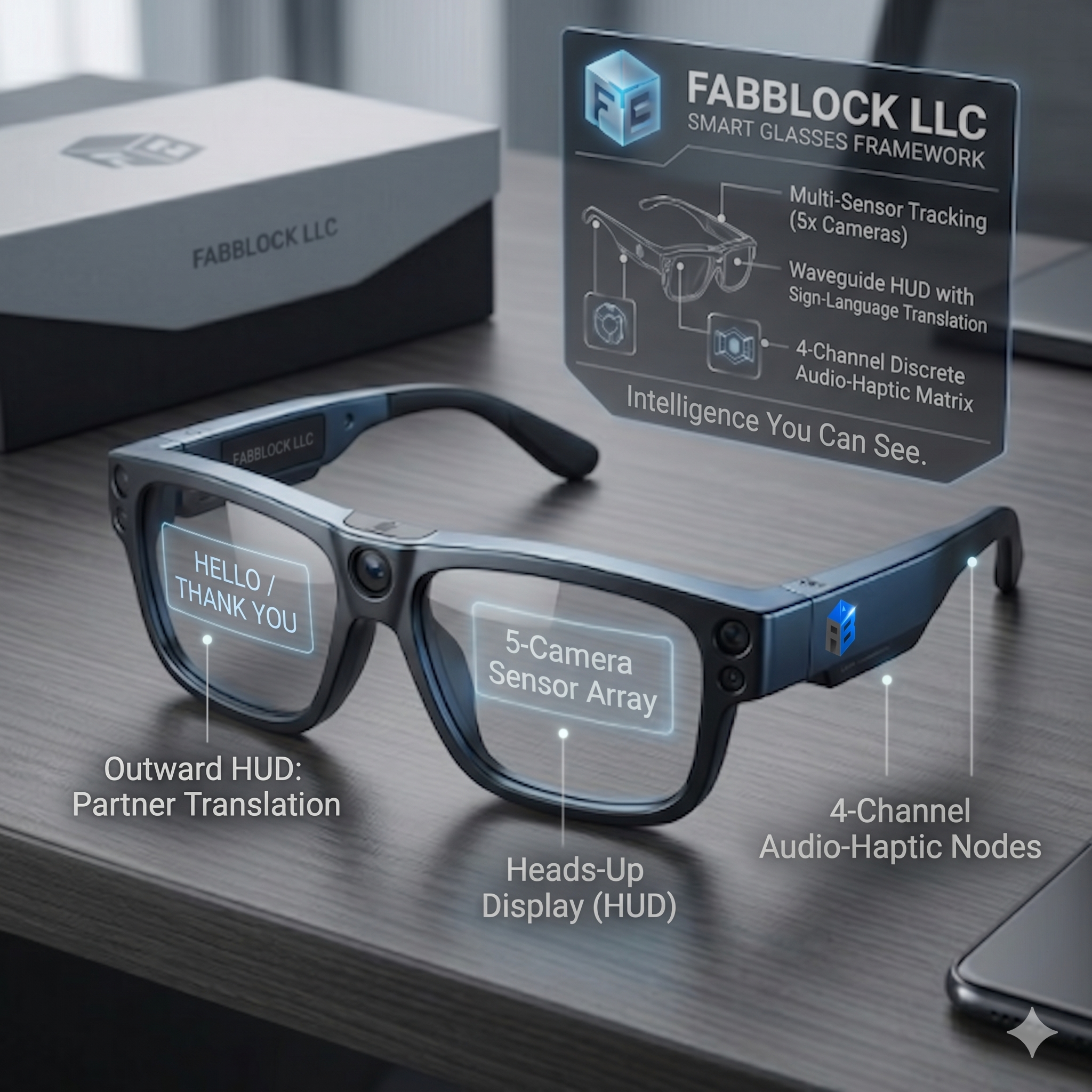
Dual wide-angle 4K optical cameras positioned at the temples capture stereoscopic data streams while an embedded miniature solid-state Micro-LiDAR array fires a continuous 3D distance point-cloud.
Computational task routing runs locally on an ultra-low-power System-on-Chip (SoC) featuring a specialized, embedded Neural Processing Unit (NPU) to avoid cloud processing reliance.
High-density, frame-integrated lithium-polymer battery cells distribute energy cleanly down the temples, managed alongside a high-speed Bluetooth 5.3 and Ultra-Wideband wireless hub.
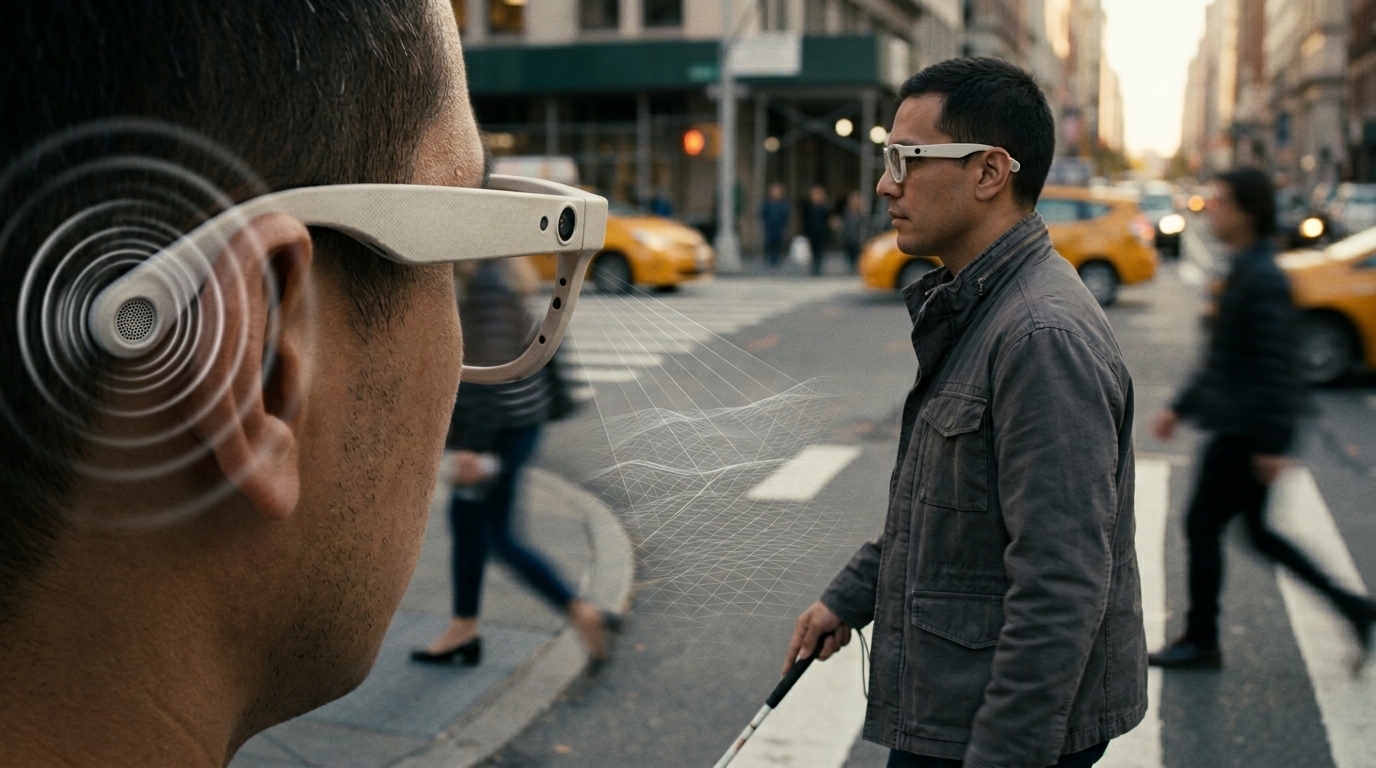
When the Profile A firmware token is active, environmental maps are translated directly into non-visual human biological receptors to foster synthetic sight metrics:
Bone-Conduction Transducers: Rests over cheekbones to parse far-range depth into ambient auditory balances without blocking ear canals.
Temple Haptic Arrays: Left/right micro-vibration pulses deliver lateral dodge requests or dual emergency stop instructions.
Modular Tongue Bitgrid: A 16x16 wireless mouthpiece projecting current grids to map elevation changes 3 feet in front of the user.
Optimized to map conversational data streams and physical environmental sounds directly into the user's upper field of vision via optical projection hardware:
Conversational Lens HUD: Decoupled ASR networks transform raw phonetic tracks into subtitle overlays displayed in lower lens quadrants.
Acoustic Vectoring Matrix: Directional microphone rows process high-frequency alerts to isolate specific speakers away from heavy background clutter.
Edge Flash Flash Warnings: Emergency audio alerts (sirens, horns) invoke flash boundaries directing immediate gaze orientation to the vector source.
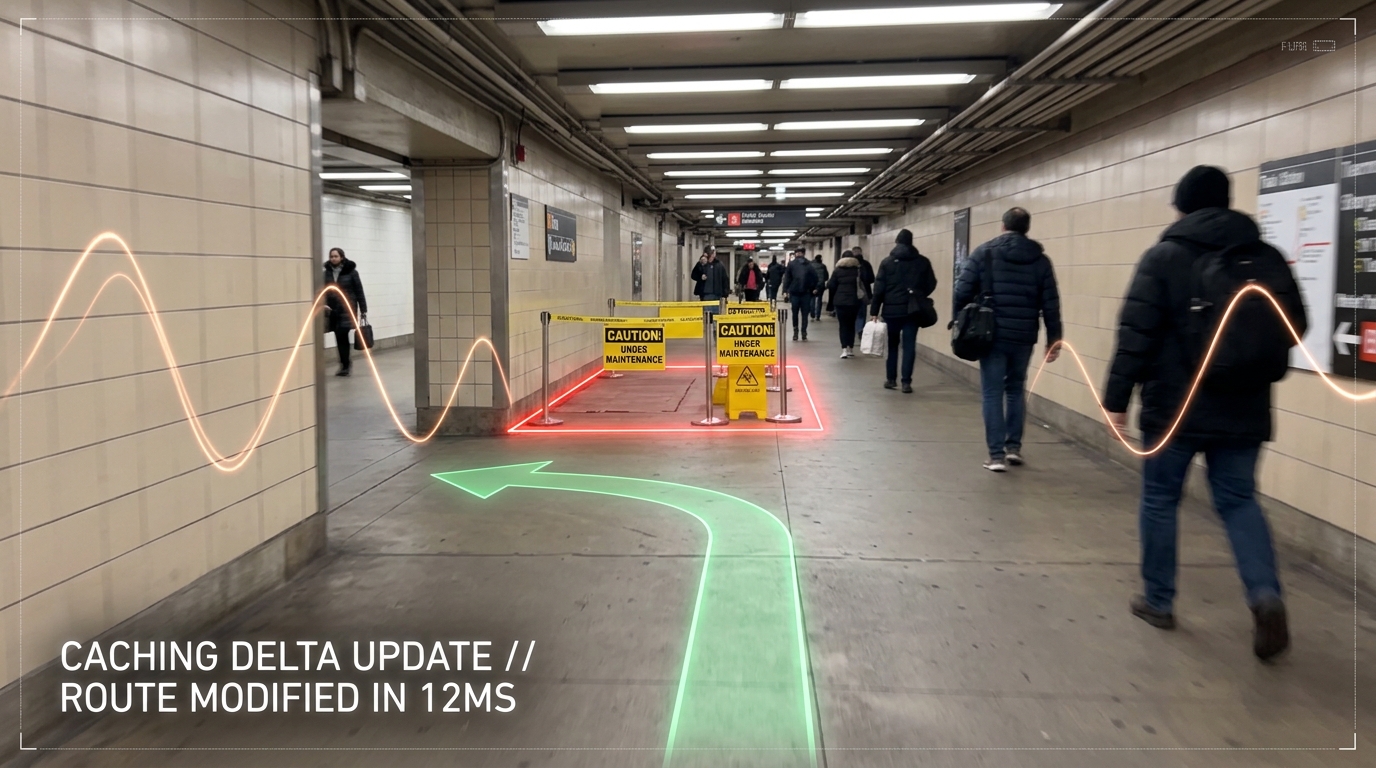
To enforce strict pedestrian safety regulations, the computational loop guarantees a deterministic envelope of < 50 milliseconds without remote server lag dependencies.
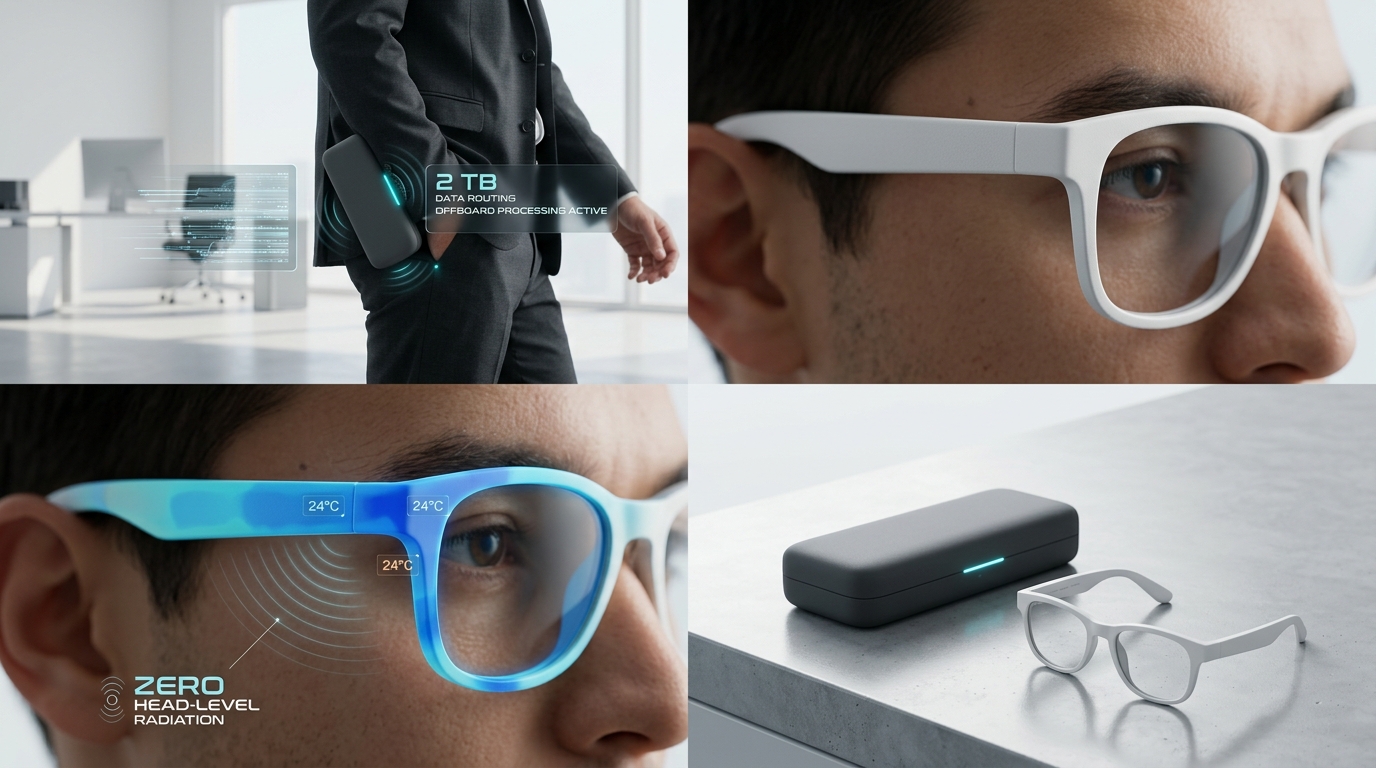
Raw stereoscopic fields map into highly compressed, quantized frame-segmentation networks (YOLO-nano/MobileNet INT8 format) to classify pathways under the compute limit.
The Core Data Routing engine filters computational noise, passing LiDAR point-clouds through local mesh geometry logic to detect terrain changes on the fly.